
Generative Engine Optimization (GEO) Services
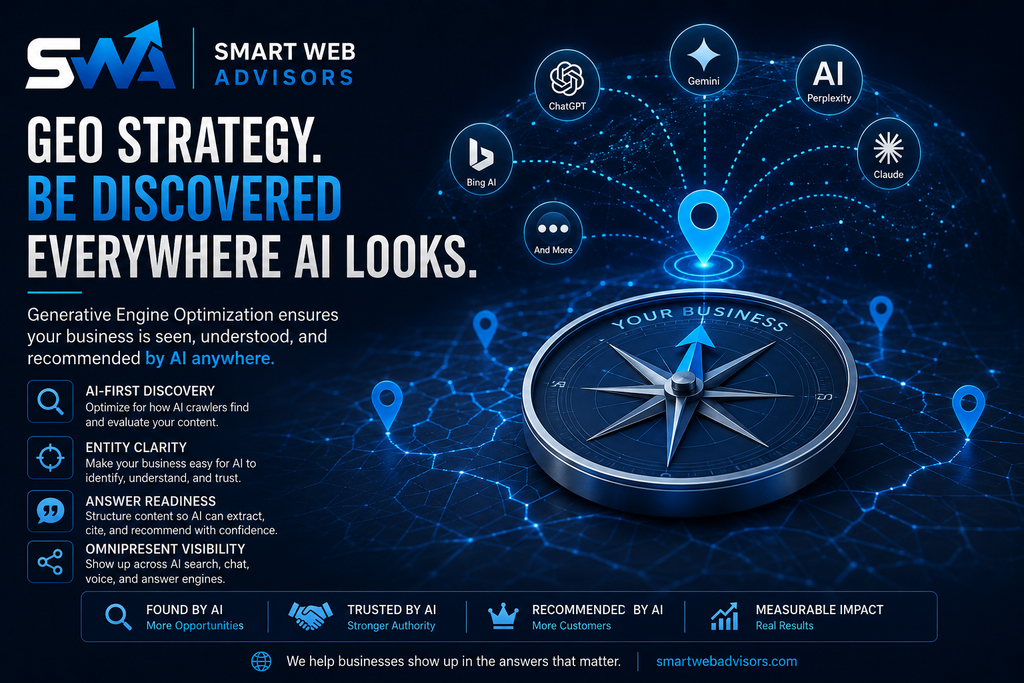
Generative Engine Optimization Services (GEO) is the work of making your website readable, trusted, and citable by generative AI systems — ChatGPT, Claude, Perplexity, Gemini, and Google’s AI Overviews. Our generative engine optimization services make sure AI crawlers can reach and parse your content, sharpen the entity signals that tell engines who you are, and build the authority that earns citations. The goal: when AI recommends a business in your category, it names yours.
What Our GEO Service Includes
Our GEO services cover everything from crawler access to entity clarity to authority building.
- AI crawler access. We audit your robots.txt and firewall so the AI bots that matter — GPTBot, ClaudeBot, PerplexityBot, Google-Extended — can actually reach your site. A blocked crawler means invisibility no content can fix.
- Readable, server-rendered content. We make sure your content lives in real HTML that crawlers can parse — not locked behind JavaScript that AI engines see as an empty page.
- Entity clarity. Consistent schema, name-address-phone consistency everywhere you appear, an llms.txt file, and sameAs links — so engines can identify your business unmistakably and distinguish it from others.
- Authority building. The citations, listings, and consistent signals generative engines weigh when they choose which sources to trust and name.
Where GEO Fits
GEO depends on solid SEO — generative engines find their sources largely through traditional search, so a site invisible to Google is invisible to AI too. It pairs with Answer Engine Optimization (AEO): AEO makes individual answers extractable, GEO makes your whole site a trusted source. Want the full method first? Read our complete GEO guide.
Frequently Asked Questions
What is the difference between GEO and AEO?
AEO optimizes individual pieces of content to be extracted as answers. GEO optimizes your whole site and business identity to be trusted and cited as a source by generative AI systems. AEO is per-page craft; GEO is site-wide infrastructure and reputation. Done together, they compound.
Can AI engines even read my site right now?
Often not — many sites accidentally block AI crawlers through old robots.txt rules or firewall settings, or hide their content behind JavaScript that crawlers can’t run. Our first step is confirming the AI bots that matter can actually reach and read your pages, because nothing else works until they can.
Is GEO proven, or is it speculation?
The mechanics are observable — engines demonstrably search, read, and cite sources — but the field is young and tactics keep shifting. Most of what works is disciplined fundamentals that also serve SEO, which makes the investment defensible even amid the uncertainty. We’ll always tell you what’s load-bearing and what’s a hedge.
How much do GEO services cost?
It depends on your site’s current state, your competition, and your goals — which is why we start with a free consultation instead of a fixed price. We scope generative engine optimization services to what actually moves your AI visibility, and you’ll know what you’re paying for and why before anything begins.
How do you measure GEO results?
We track how the major AI engines describe and cite your business over time — whether they mention you for your key topics, which pages they reference, and whether the facts they state are accurate. We set a baseline at the start so you can see the shift, not just take our word for it.
How does GEO work with SEO and AEO?
They’re layers of one strategy. SEO earns rankings, answer engine optimization structures individual answers, and GEO makes your whole site citable to AI systems. Because AI engines pull from pages that already rank, strong SEO is the foundation — we build all three together. You can read the full method in our GEO guide.
Find Out Which Gates You’re Failing
n a free consultation we’ll check whether AI crawlers can reach you, whether your content reads cleanly to them, and who the engines actually cite in your market today — then show you whether GEO services are the right next step.